
Navigating the South African Service Economy in 2026
In 2026, South African field service businesses-from Johannesburg plumbers to Cape Town HVAC specialists-face a unique set of economic pressures. Between fluctuating fuel costs, electricity surcharges (Eskom tariffs), and a highly competitive local market, simply 'guessing' your rates is no longer an option. Developing a robust pricing strategy is the difference between a thriving business and one that barely breaks even after paying technicians and overheads.
This guide explores service pricing in South Africa, providing you with a roadmap to set field service rates that cover your costs, attract high-quality clients, and ensure long-term sustainability.

Understanding Your True Cost of Doing Business (CODB)
Before you can set a price, you must understand your expenses. In the South African context, many business owners forget to include specific hidden costs that erode margins. Your CODB includes:
- Labor: Not just the hourly wage, but UIF, SDL, and workers' compensation (COID).
- Travel: SARS-compliant vehicle reimbursement rates, fuel, and vehicle maintenance.
- Overhead: Office rent, software (like Omni Field), insurance, and marketing.
- Unbillable Time: Time spent in traffic, quoting, or organizing equipment at the warehouse.
Example: If your monthly overheads are R50,000 and your team only has 100 billable hours available, you need to earn R500 per hour just to cover costs before any profit is made.
Hourly vs. Flat Rate Pricing: Which is Best for You?
Choosing between hourly vs flat rate pricing is a major decision for service providers. In 2026, we see a shift toward value-based flat rates in South Africa, but each model has its place.
1. Hourly Rate Model
Common for complex repairs where the scope is unknown (e.g., electrical fault finding). It ensures you are paid for every minute on site, but it can make customers anxious about the final bill.
2. Flat Rate (Upfront) Pricing
The customer pays a fixed price for a specific job (e.g., R1,200 for a standard geyser service). This improves cash flow and transparency but requires you to be highly efficient to remain profitable.
3. The Hybrid Approach
Many successful SA firms use a 'Call-out Fee' (covering the first 30-60 minutes) followed by a flat rate for the actual repair work. This protects your travel time and initial diagnostic effort.
Quoting Best Practices to Win More Jobs
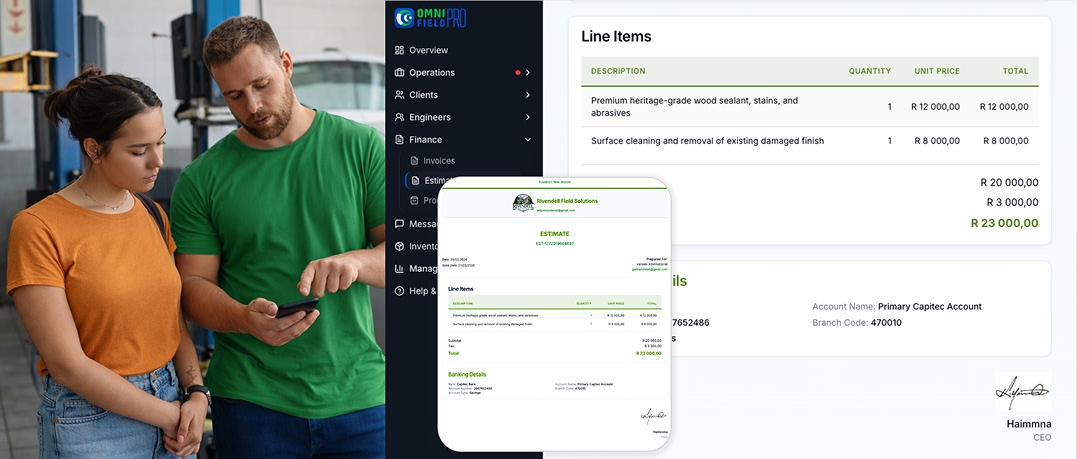
Effective quoting best practices are about professional presentation and speed. In the South African market, clients often reward the quickest professional response.
- Itemize Clearly: Break down labor and parts. Transparency reduces disputes.
- Set Validity Periods: With material costs changing, ensure your quotes are only valid for 7 to 14 days.
- Mobile Quoting: Use field service software to generate quotes on-site. Showing a client a digital quote before you leave their driveway increases your 'win' rate by up to 40%.
- Include Terms & Conditions: Clearly state your payment terms (e.g., 'Due on Completion' or '50% Deposit Required').
Adjusting for 2026: Value-Based Pricing
Stop pricing based on what your cheapest competitor charges. If you provide a 24-hour emergency service, use specialized equipment, or provide a 12-month guarantee on workmanship, your field service rates should reflect that premium value.
To justify higher prices, focus on these three pillars:
- Reliability: Showing up on time and communicating via SMS/WhatsApp alerts.
- Professionalism: Digital invoices, branded uniforms, and clean equipment.
- Convenience: Faster turnaround times and seamless booking processes.
Data-Driven Decisions with Omni Field
To truly master your pricing, you need data. Omni Field helps South African service businesses track job duration, material costs, and technician productivity in real-time. By reviewing your 'Job Profitability' reports, you can identify which services are making you money and which are costing you. Pricing is not a 'set and forget' task-it is a continuous process of refinement based on real-world performance.