The Pulse of Your Service Business: Understanding Cash Flow
In the South African service industry, revenue is vanity, but cash flow is sanity. Whether you are running a plumbing firm in Gauteng or a landscaping business in the Western Cape, the challenge remains the same: cash flow management for your service business is the difference between scaling your operations and struggling to meet payroll.
Unlike retail, field service businesses often incur upfront costs-fuel, materials, and labor-well before the client settles the invoice. This delay creates a 'cash gap' that can swallow even the most profitable companies. To survive, you must move from reactive bookkeeping to proactive financial management.

Invoicing Best Practices: Speed is Precision
The longer you wait to send an invoice, the longer the client feels they can wait to pay it. Implementing invoicing best practices is your first line of defense against stagnant cash flow. In the local context, South African clients (both residential and corporate) respond best to professional, clear, and immediate billing.
- Invoicing on the Spot: Don't wait until Friday afternoon to do your paperwork. Use mobile field service software to generate and send invoices the moment the job is completed.
- Itemized Clarity: Ensure labor, parts (with correct VAT markup), and call-out fees are clearly separated to avoid disputes that delay payment.
- Multiple Payment Channels: Offer diverse options such as EFT, SnapScan, or mobile card machines to remove friction at the point of sale.
Late Payment Solutions in the South African Context
Dealing with late payment solutions in South Africa requires a balance of firmness and relationship management. Our economy relies heavily on word-of-mouth, so your collection process must be professional yet persistent.
- The 24-Hour Reminder: Send an automated 'Thank You' note 24 hours after the service, gently reminding them that the invoice is in their inbox.
- The Progressive Follow-up: If an invoice is 3 days overdue, a friendly WhatsApp or phone call is often more effective than an email, which can easily be missed in a busy inbox.
- Interest and Penalties: Ensure your Terms and Conditions (signed before the job starts) include a clause regarding late payment interest in accordance with the National Credit Act.
Managing Material Costs and Deposits
One of the biggest drains on cash flow for South African contractors is 'floating' the cost of expensive parts. For any job where materials exceed a specific threshold (e.g., R5,000), a deposit is non-negotiable.
Standard Practice Recommendation: Request a 50% upfront deposit for material-heavy jobs. This covers your out-of-pocket expenses and ensures the client is financially committed to the project. This practice is widely accepted in the SA construction and maintenance sectors and protects you from total loss should a client default.

Leveraging Technology for Financial Health
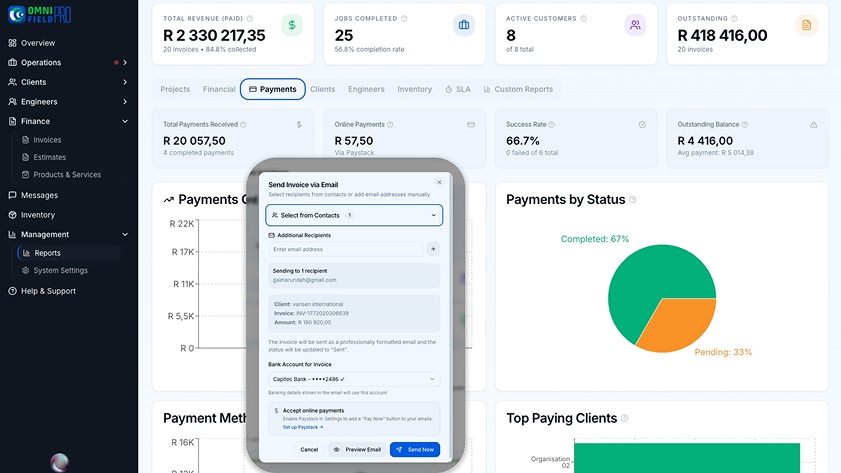
Manual spreadsheets are the enemy of growth. To maintain true financial health, you need real-time visibility into your Accounts Receivable. A dedicated Field Service Management (FSM) platform like Omni Field allows you to:
- Track which technicians are generating the most revenue versus their costs.
- Identify 'problem clients' who consistently pay late.
- Automate payment reminders so you don't have to spend hours on the phone.
- Sync seamlessly with accounting software like Xero or Sage, ensuring your VAT obligations are always accurate.
Conclusion: Building a Resilient Future
Improving your cash flow isn't just about surviving the month; it's about building a business that can weather South Africa's economic fluctuations. By implementing invoicing best practices, being proactive with late payment solutions, and utilizing the right technology, you transition from a 'worker' to a 'business owner'.
Take control of your numbers today. Start by auditing your current average 'Days Sales Outstanding' (DSO) and set a goal to reduce it by 5 days over the next month. Your bank balance will thank you.